
Dryer vent cleaning removes lint and debris from the exhaust duct that carries hot, moist air from behind your clothes dryer to the hood on your outside wall. It is not appliance repair, and it is a separate job from cleaning your heating and cooling ducts. It matters because of airflow: the U.S. Fire Administration reports that “Failure to clean (31%) was the leading factor contributing to the ignition of clothes dryer fires in homes from 2018-2020,” citing the National Fire Incident Reporting System. We serve homeowners nationwide. Call (877) 819-0760 for a quote before anything starts.
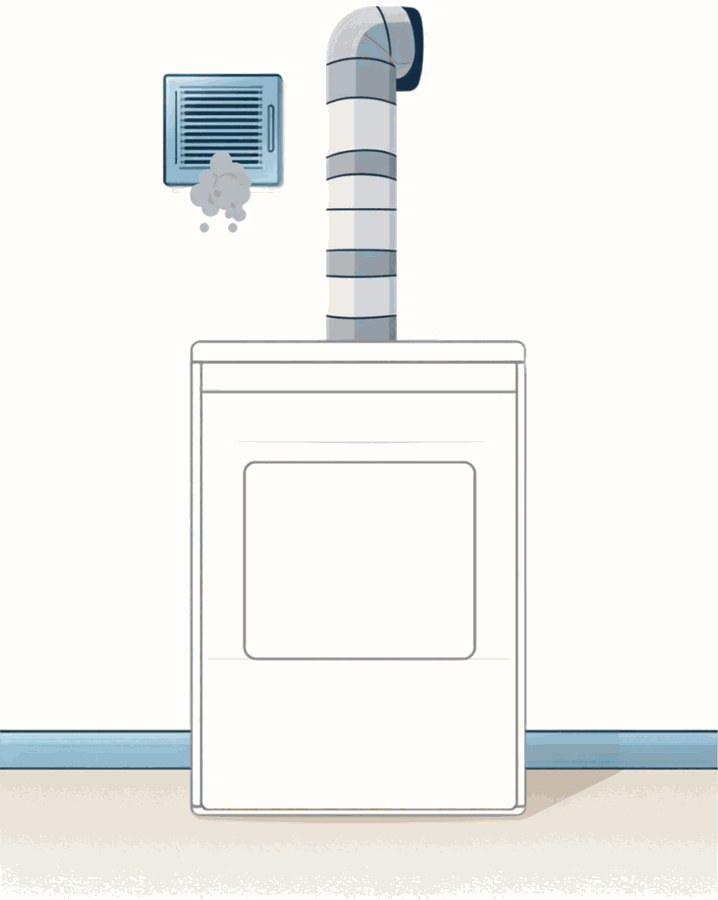
Why lint in the vent restricts airflow
USFA describes lint as “a highly combustible material that can accumulate both in the dryer and in the dryer vent,” and adds that “Accumulated lint leads to reduced airflow and can pose a potential fire hazard.” The Consumer Product Safety Commission puts the mechanism plainly: lint can block the flow of air, cause excessive heat build-up, and result in a fire in some dryers. USFA notes that buildup accelerates in a long or bendy run, where moisture condenses on the vent surfaces and attracts lint; blockage can also come from animal nests or damage to the venting itself.
Signs a home dryer vent needs attention
Most show up without tools. USFA says that if heavy clothes such as blue jeans or towels take a long time to dry, or clothes feel hotter than usual at the end of the cycle, a clogged dryer vent exhaust is likely the problem.
- Jeans, towels and other heavy loads taking noticeably longer to dry
- Laundry still damp at the end of a normal cycle
- Clothes hotter than usual coming out of the drum
- No exhaust at the outdoor hood, or lint collecting around it
Lint is combustible and collects in both the dryer and the duct, which is why the symptoms above are worth acting on rather than working around.
What a professional visit involves
A visit surveys the whole exhaust path, not one end. The technician traces the run from the appliance to the exterior hood, clears the lint, cleans behind the dryer where USFA notes lint builds up, and checks the venting for damage, crushing and restriction. Material matters: CPSC advises replacing plastic or foil accordion-type ducting with rigid or corrugated semi-rigid metal duct, which most manufacturers specify because it provides maximum airflow. So does termination — USFA notes that building codes require dryers to exhaust directly outdoors, and prohibit venting into attics, soffits, ridge vents or crawl spaces.
For the heating and cooling side of the house, see residential air duct cleaning or our full list of home services.
What dryer vent cleaning does not cover
Clearing a vent does not fix a failing appliance; a bad drum, heating element or thermostat is an appliance repair call. We do not work on gas lines: USFA advises having gas-powered dryers inspected by a professional annually so the gas line and connection are intact and free of leaks. We do not do electrical work either — USFA’s guidance is to plug major appliances directly into a wall outlet and never use an extension cord, which can overheat and start a fire. Cleaning a vent also promises nothing about your health or your energy bills.
Safe habits between visits
None of USFA’s homeowner list requires opening the machine.
- Never run the dryer without a lint filter; clean it before and after each cycle
- Clean behind the dryer, where lint builds up
- Check that the venting behind the dryer is not damaged, crushed or restricted
- Confirm the outdoor vent covering opens while the dryer is operating
- Brush the lint filter with a nylon brush at least every six months, or sooner if it clogs
That six-month interval belongs to the filter, not the vent. CPSC adds two cautions: take care with clothes soiled by volatile chemicals such as gasoline, cooking oils or cleaning agents, and do not leave dried clothes sitting in the dryer or piled in a laundry basket.
Get a quote by phone
Price follows the job: the length of the run, how many turns it takes, where the hood sits, and how much has built up. Describe your setup and you will get a number before anyone starts. Call (877) 819-0760 or use the contact page. For whole-system pricing, our air duct cleaning cost guide covers the drivers.
Frequently asked questions
Who cleans dryer vents?
Dryer vent cleaning is done by firms that specialize in duct and vent work, and it is separate from appliance repair. The technician clears the duct running from the dryer to the outside hood, confirms the exhaust terminates outdoors, and looks for crushed, damaged or blocked sections. Gas line work, electrical work and anything inside the appliance cabinet belong to a qualified professional.
How much does dryer vent cleaning cost?
We do not publish a flat price. The work depends on the length of the duct run, how many turns it has, where the outside hood sits, and how much lint has built up. Call (877) 819-0760, describe your setup, and you will get a quote before any work starts.
How often should dryer vents be cleaned?
The U.S. Fire Administration and the Consumer Product Safety Commission both say the vent and exhaust duct should be cleaned periodically, and neither publishes a fixed interval. NFPA consumer guidance suggests clearing lint from the vent pipe about once a year, or sooner if clothes take longer than normal to dry. The lint filter is different: USFA says clean it before and after each cycle.
What are the signs a dryer vent is clogged?
USFA says that if heavy clothes such as blue jeans or towels are taking a long time to dry, or clothes feel hotter than usual at the end of the cycle, a clogged dryer vent exhaust is likely the problem. CPSC adds that laundry still damp when a typical cycle ends can mean the lint screen or the exhaust duct is blocked.
Can I clean the dryer vent myself?
Parts of it. Cleaning the lint filter before and after each cycle, clearing lint from behind the dryer, and confirming the outdoor vent covering opens while the dryer runs are homeowner tasks USFA recommends. Do not disconnect a gas dryer, open the appliance cabinet or touch wiring. USFA advises having gas dryers inspected by a professional annually so the gas line and connection are intact and free of leaks.
More answers: our air duct and vent FAQ library.